
Proper Hand Hygiene
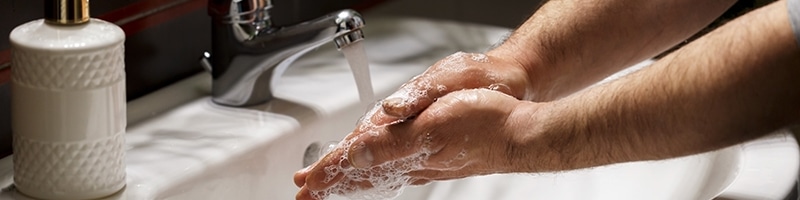
Hand hygiene is a general term referring to any action of hand cleansing and is undisputedly the single, most effective method for preventing the transmission of microorganisms. The hands of cleaners are the most common mode of transmission of microorganisms from one surface to another.
The cleaner’s hands continuously touch surfaces and substances including objects, food, waste, and their own body. Since cleaners typically move from room-to-room, carrying out several tasks and procedures, there are more opportunities to transmit microorganism and therefore many more indications for hand hygiene than there are in the activities of daily living.
Hands are a common site for a variety of bacteria and fungi that can be considered normal flora however there are other microorganisms, known as transient flora, that can cause problems.
Transient flora, which colonizes the outer layers of the skin, is easily removed by routine handwashing. Transient flora does not usually multiply on the skin, but they survive and sporadically multiply on the skin surface.
Hand hygiene can be accomplished by either rubbing hands with an alcohol-based hand sanitizer that contains between 60 and 80 percent alcohol although the best range is 62 to 70 percent alcohol or washing with soap and water. Studies have shown that the use of soap and water is more effective than alcohol-based hand rub, however when soap and water is not an option, an alcohol-based hand rub is acceptable.
The effectiveness of the alcohol-based hand rub is based on the quality of the product, the amount of product used, the time spent applying the product to the skin, and the hand surface that receives contact with the product.
When hands are visibly dirty or contaminated by organic matter i.e. body fluids or dirt, when there is potential to be exposed to certain spore-forming microorganisms, or after using the washroom, the use of soap and water for hand hygiene is the preferred method.